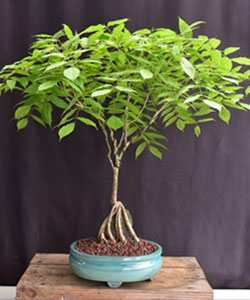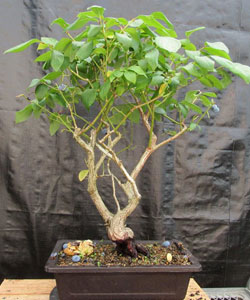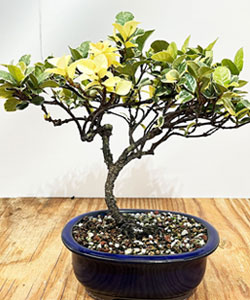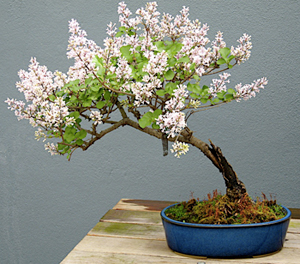
.

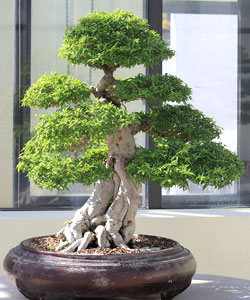
Trident Maple Bonsai Tree

Trident Maple Bonsai TreeThe Trident Maple Bonsai, botanical name Acer buergerianum, is native to eastern China and Japan. The Trident Maple got its name because it has leaves with three-pointed lobes.

One of the main features of Trident Maple is that it can take heavy root pruning, which makes it perfect for bonsai. You can use different styles with Trident Maple bonsai tree, including curved-trunk, broom, group plantings, and clump styles. Root-over-rock style is also very popular because of the rapid root growth.

Trident Maple Bonsai Watering

Needs to be watered on the daily basis during its growth period, from the middle of spring to the end of summer, since roots have high water content. Trident Maple bonsai tree requires much less water during winter time, so keep the soil moist but well drained.

Trident Maple Bonsai Pruning

Trident Maple Bonsai TreeTrim new shoots during growing season keeping one pair of leaves on old trees and two pairs of leaves on young trees. You need to keep only one pair of leaves per shoot when they grow at each leaf node. Leaf cutting ensures that leaves are small. During summer cut back weak branches by 1/3. That will strengthen the branches and encourage new growth.

Trident Maple Bonsai Fertilizing

Start feeding with general fertilizer from spring to early fall. It is better to use nitrogen-free fertilizer in early fall to avoid color diminish of autumnal leaves. You don’t need to fertilize during winter.

Trident Maple Bonsai Hardiness

The Trident Maple Bonsai tree can tolerate freezing temperature for a short period of time when mature enough. I would recommend protecting it from sever freezing and also early in the winter because its fast-growing roots are sensitive to frost damage. Trident Maple bonsai tree does the best in the temperatures from 35F – 90F. The ideal location is USDA Zone 5.

Trident Maple Bonsai Repotting

Trident Maple Bonsai TreeEstablished Trident Maple bonsai tree needs to be repotted once every two years. Younger tree needs to be repotted yearly during spring before buds open. The best soil for Trident Maple is Japanese Akadama clay.

Trident Maple Bonsai Pets and Diseases

Trident Maple bonsai trees are generally problem-free. They could be sometimes attacked by aphid. Other maple pests include borers, scales and whiteflies.

If you have poor air circulation or dry roots, powdery mildew might develop. Under a lot of stress they may be affected by leaf spot and anthracnose.

Buying Trident Maple Bonsai

There are a lot of different places you can get a Trident Maple bonsai from. My friends and I buy all of our bonsai trees online from “Bonsai Boy” Nursery located in New York. I tried buying bonsai trees from other sites, but they had much higher prices and the trees were not always properly trained. “Bonsai Boy” has the lowest prices and highest quality bonsai trees you can find. This family operated company has been in business since 1993. It has been really great experience and I feel lucky finding them. To buy Trident Maple click on the links below:

Buy Trident Maple Bonsai Tree Medium – Only $59.95!
Buy Trident Maple Bonsai Group – Only $295.00!
Buy Trident Maple Bonsai Tree (41 years old) – Only $700.00!

If you know other good online bonsai stores, please let me know so I can post them on my site. Have a great day.

Susan Brian

Japanese Maple Bonsai Tree

Japanese Maple Bonsai TreeBotanical name for Japanese Maple bonsai is Acer palmatum. Native to Japan, Japanese Maple is one of the most popular deciduous bonsai trees. It has flexible branches that response very well to training and wiring.

Leaves go through wide range of colors, from green to orange, to deep red, as they mature. Many styles can be applied to Japanese Maple, including semi-cascade, triple-trunk, raft, curved-trunk,broom, group planting, and clump styles.

Japanese Maple Bonsai Watering

Japanese Maple bonsai tree needs more water during growing season. From middle of spring to the end summer water once a day in the evening when the temperature is cooled down. In the winter water when necessary to prevent soil from drying up.

Japanese Maple Bonsai Hardiness

Japanese Maple Bonsai TreeJapanese Maple bonsai tree can tolerate freezing temperature for a short period of time when mature enough. I would recommend protecting it from sever freezing to avoid frost damage. Japanese Maple bonsai tree does the best in the temperatures from 30F – 90F. The ideal landscape is USDA Zone 5 or 6 depending on the variety.

Japanese Maple Bonsai Pruning

During growing season cut back leaves of healthy trees to reduce leaf size and intensify fall leaf color. To maintain the style you can pinch new shoots regularly. This will promote a beautiful network of branches. Winter is a good time to prune main branches.

Japanese Maple Bonsai Fertilizing

Japanese Maple Bonsai TreeFertilize every other week from spring to the end of summer. Use nitrogen-free fertilizer during fall. There is no need to fertilize during winter.

Japanese Maple Bonsai Repotting

Young Japanese Maple bonsai trees need to be repotted annually. Well established maples, that is older than 10 years, should be repotted once every three years in the spring before buds open. Best soil to use is Japanese Akadalama clay.

Japanese Maple Bonsai Pets and Diseases

Japanese Maple bonsai tree generally is problem-free. Make sure to provide good air circulation to avoid powdery mildew development. If the tree is stressed, aphids and scale might also be a problem. During growing season check leaf surface regularly to catch any problem before it becomes severe. Have a great day.

Buying Japanese Maple Bonsai

Japanese Maple Bonsai TreeThere are a lot of different places you can get a Japanese Maple bonsai from. My friends and I buy all of our bonsai trees online from “Bonsai Boy” Nursery located in New York. I tried buying bonsai trees from other sites, but they had much higher prices and the trees were not always properly trained. “Bonsai Boy” has the lowest prices and highest quality bonsai trees you can find. This family operated company has been in business since 1993. It has been really great experience and I feel lucky finding them. To buy Japanese Maple click on the links below:

Buy Japanese Maple Bonsai Tree Small – Only $39.95!
Buy Japanese Maple Bonsai Tree Large – Only $69.95!
Buy Japanese Maple Bonsai Tree (29 years old) – Only $295.00!

If you know other good online bonsai stores, please let me know so I can post them on my site. Have a great day.

Susan Brian

Chinese Elm Bonsai Tree

Chinese Elm Bonsai TreeThe Chinese Elm is the best elm for creating a bonsai tree. Chinese Elm bonsai tree is native to China, Korea and Japan. The botanical name for Chinese Elm is Ulmus Parvifolia. Chinese Elm bonsai from China and Korea sometimes mistakenly named Zelkova sinica.

Chinese Elm bonsai tree has small glossy green leaves and corky bark. It responses very well to pruning by producing mass of new shoots. This is really a great tree for bonsai because you can use any style you like including slanting, straight-trunk, group planting, and broom styles.

Chinese Elm Bonsai Watering

Needs to be watered regularly during growth season, from beginning of the spring till the end of summer. Keep the soil moist with good drainage. Chinese Elm bonsai tree needs less watering during winter. Don’t let the soil dry out completely.

Chinese Elm Bonsai Pruning

Chinese Elm bonsai tree pruning is very easy. Branches need to be pruned in spring before the growing season starts. At the end of spring cut back new shoots to one or two leaves as soon as they grow out of line. Two new shoots will grow at each leaf node.

Chinese Elm Bonsai Hardiness

Chinese Elm Bonsai TreeChinese Elm bonsai tree that comes from Japan is very hardy. It can tolerate freezing temperature for a short period of time when mature enough. It is best to protect Chinese Elm bonsai tree from sever cold during winter because it contains a lot of water in the roots that might get damaged when the water expands as it freezes.

It does the best in the temperatures from 30F – 90F. The ideal location is USDA Zone 4 or 5. Chinese Elm bonsai from China and Korea are hardy, but not acclimatized for freezing temperatures.

Chinese Elm Bonsai Fertilizing

If your Chinese Elm bonsai tree is growing outdoors, start feeding it with a general bonsai fertilizer every other week from when the tree leafs out till the end of the summer. If your Chinese Elm is growing indoors, fertilize it every week during growing season and every month during winter.

Chinese Elm Bonsai Pets and Diseases

Chinese Elm bonsai is a problem-free bonsai. Under stress can experience problems with aphids, scale insects, or spider mites if grown indoors. Powdery mildew might develop if the air circulation is poor and roots are dry.

Chinese Elm Bonsai Repotting

Chinese Elm Bonsai TreeChinese Elm bonsai tree needs to be repotted every year when younger and once every two years when the tree is older. The reason for frequent repotting is because Chinese Elm bonsai likes a lot of water which causes soil to break down over time. Fresh soil holds water better and also provides roots with more oxygen. Have a great day.

Buying Chinese Elm Bonsai

There are a lot of different places you can get a Chinese Elm bonsai from. My friends and I buy all of our bonsai trees online from “Bonsai Boy” Nursery located in New York. I tried buying bonsai trees from other sites, but they had much higher prices and the trees were not always properly trained. “Bonsai Boy” has the lowest prices and highest quality bonsai trees you can find. This family operated company has been in business since 1993. It has been really great experience for me. To buy Chinese Elm click on the links below:

Buy Chinese Elm Bonsai Tree-Extra Large – Only $129.95
Buy Chinese Elm Bonsai Tree Large – Only $59.95
Buy Chinese Elm Bonsai Tree-Medium – Only $49.95

If you know other good places, please let me know so I can post them on my site. Have a great day.

Susan Brian

.