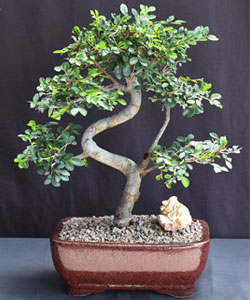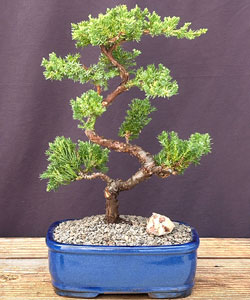
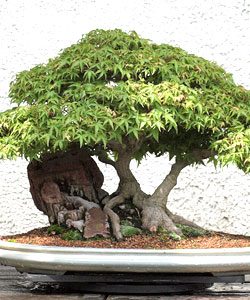
Chinese Bonsai, also called Penjing, is about creating a miniature tree or a landscape in the container.
This beautiful art form was originated in China thousand years ago. Bonsai was created by highly educated aristocrats of China, inspired by nature, poetry and landscape paintings. These different art forms were linked closely together.
Chinese artists believed that by better understanding nature they will improve their spiritual development.
Each area of China had its own bonsai style, specializing in a certain species of tree, certain training techniques and certain type of design. There is a deep Chinese philosophy behind each bonsai tree and landscape scene. It is more about revealing an untold story and discovering mysteries of nature. Chinese bonsai is about chaos and creativity that is not trying to obey rules and reach perfection. (more…)
Filed under:
chinese bonsai
No Comments »
Chinese Bonsai, known as Penjing, was created in China thousand years ago and got to Japan during period of Zen Buddhism around 1195.
Once it was introduced into Japan, bonsai art began to develop in its own way.
At first, only aristocrats of Japan had access to this kind of art. It was a symbol of prestige and honor. But as time went by Chinese bonsai got very popular and was introduced to the public.
Simple bonsai art was refined by Japanese artist, who created a set of rules and shapes. Because Japanese bonsai art was born from Chinese bonsai they both have a lot of similarity that makes it sometimes quite difficult to distinguish. (more…)
Filed under:
chinese bonsai
No Comments »
Chinese Bonsai (Penjing) is not only about miniature trees in the container. It is much wider concept of creating natural scenes using different elements of nature like rocks, stone, water, sand and trees.
Some of the compositions consist only of rocks representing mountains. It is not unusual for the penjing landscape to have mostly rocks and very few trees or no trees at all. Chinese bonsai art is full of contrasts which create rhythm and dramatic tension resolving in a dynamic balance.
Penjing art can be split into 3 main types:
1. Tree Penjing (Shumu Penjing) – Is Chinese bonsai art of creating miniature tree or several trees in a small shallow container. Very often Chinese bonsai represents an animal or a character. It is not about creating perfection but showing the inner beauty of the tree. (more…)
Filed under:
chinese bonsai
No Comments »
I never thought about Chinese Bonsai as a tree torture and I was very surprised to see a series of bonsai by Chinese artist Shen Shaomin presented at Frey Norris Gallery. Shen shows them trussed and tugged by the thumbscrew brackets, collars and barricades that engineer their growth.
(more…)
Filed under:
chinese bonsai
1 Comment »
Chinese Bonsai (Penjing) has much less strict rules and is more philosophical and spiritual form of art than Japanese bonsai. Chinese and Japanese bonsai have their differences but are very closely related and are sometimes difficult to distinguish.
A high quality Chinese bonsai composition has to look entirely natural. Although there is more freedom in the Penjing, many of the general bonsai rules still apply.
To create a successful Chinese bonsai composition you need to know basic training techniques and be familiar with plant maintenance like re-potting, watering, feeding and etc.
After learning main Chinese Bonsai Styles and rules you’ll have better control of your bonsai. It will make it easier for you to pick the right tree for your bonsai. (more…)
Filed under:
chinese bonsai
No Comments »
Bonsai trees need water to survive. Regular tree in the natural environment needs a great deal of water that it can get by forming deep root system, which extends far into the ground. Bonsai plants need considerably less water proportional to its size. Even if your bonsai is growing outside you need to make sure it is getting enough water.
During winter outdoor bonsai usually gets enough water from the rain and snow. But check to see if soil is moist enough. Since bonsai are grown in shallow pots, which don’t hold much compost, it is important that you water your bonsai daily during spring and summer, since it is growing time.
For outdoor bonsai the best time for watering is in the evening after sunset. If the summer is very hot it is ok to water you bonsai also during the day. Avoid getting water on the foliage since sun may cause water droplets to act as a lens and burn bonsai leaves. (more…)
Filed under:
Bonsai Tree Care
No Comments »
Once you have decided on growing conditions and bonsai style, it is time to buy the plant. When it comes to buying a plant for bonsai you have several sources:
1. Specialized nurseries
It is always best to buy from the dealer that is specializing in bonsai, because they know what trees are suited for the local climate and how to take care of them. Trained staff provides bonsai trees with proper care assuring that you are getting a perfectly healthy tree, unlike department stores and farmers market, where employees know nothing about bonsai.
2. Garden center
Most of the garden centers sell established bonsai trees, but be careful buying plants that are newly potted and pruned to create an instant bonsai. Avoid buying plant that has torn or damaged leaves. Shrunken and dried buds might be an indicator of incorrect watering. Buds should be well formed and shapely bursting with life and strength. And don’t forget to check for pests and diseases. (more…)
Filed under:
chinese bonsai
No Comments »
You need to consider few things before buying a bonsai tree. First decide where you are going to put your bonsai tree, whether you would like to grow it outdoors or indoors. This will directly determine your choice of bonsai tree.
Outdoors or Indoors
A lot of people think that bonsai are houseplants but most of the bonsai are hardy trees and cannot live indoors. Imagine digging out a maple tree from your yard and bringing it indoors. I will not survive for long. Bonsai maple is just a smaller version of the real tree.
If you want to grow your bonsai tree outdoors make sure your winters are not too cold and not too warm for the species you select. (more…)
Filed under:
chinese bonsai
1 Comment »
Healthy bonsai need to be fertilized regularly. The most important elements in the bonsai fertilizer are potassium (K), nitrogen (N) and phosphorus (P). Other elements appear in fewer quantities and are not as important. To give you a general idea, nitrogen (N) promotes leaf and branch development and growth in general. Phosphoric acid (P) enhances root and cell tissue development. Potassium (K) helps production and circulation of sap, flowering and fruiting.
With so many different bonsai fertilizers available in the store, it can be very overwhelming to pick the right one for your bonsai tree. Bonsai fertilizers are applied in two basic forms solid and liquid. There are few types that you can buy: (more…)
Filed under:
Bonsai Tree Care
No Comments »

Bonsai should be repotted every few years. The best time of the year for repotting is during spring or early summer when buds are starting to swell. The frequency of repotting depends on the plant specifications, but repotting technique is the same.
Flowering apples and cherries should be repotted in early fall. Azaleas and quince should be repotted immediately after they have finished flowering. Bonsai repotting has many advantages. It improves soil quality because soil breaks down over time. Fresh soil helps to bring more air to the roots of the plant.
Repotting process involves removing old roots making room for new ones, which helps to keep your bonsai small. Bonsai repotting also helps water retention since fresh soil holds water much longer. You can prevent potential pests and diseases by checking roots after removing your bonsai from the pot. (more…)
Filed under:
Bonsai Tree Care
No Comments »